- 9811152332
- rohit@threefold.in


Synopsis: Ep. 03 of CV Talks with Vinayak Thalange, Director- Engine & Driveline, Volvo Trucks Technology & Industrial Division
The commercial vehicle industry is standing at the edge of one of the biggest technological transformations in its history. In Episode 3 of CV Talks, hosted by Rohit Dewan, Portfolio Director, CVF, the discussion with Vinayak Thalange, Director – Engine & Driveline at Volvo Trucks Technology & Industrial Division, explored the rapidly evolving future of powertrains and the shift from traditional diesel dependency to a multi-fuel mobility ecosystem.
The conversation began by acknowledging diesel’s historic role as the backbone of India’s road transport economy. For decades, diesel engines powered the country’s logistics and freight movement, enabling economic growth and supporting long-haul transportation across challenging geographies. However, as Vinayak highlighted during the discussion, the industry is no longer debating whether the transition away from diesel will happen, but rather how quickly it will occur and which technologies will emerge as dominant solutions for different applications.
One of the central themes of the discussion was the increasing complexity of the future mobility landscape. Instead of a straightforward shift from diesel to electric vehicles, the future of commercial transportation is shaping up to be far more diverse. Technologies such as LNG, CNG, hydrogen, fuel cells, battery electric vehicles, and hybrid solutions are all competing and coexisting simultaneously. Vinayak emphasized that no single technology can solve every transport challenge, especially in a country as operationally diverse as India. The industry is moving towards a “multi-fuel mobility” model where different powertrain technologies will serve different use cases depending on factors such as route length, payload requirements, infrastructure availability, and operational economics.
The discussion also examined the forces accelerating this transformation. According to Vinayak, the current momentum is being driven by a combination of regulatory pressure, customer expectations, sustainability commitments, and technological advancements. Environmental regulations are becoming stricter across global markets, compelling OEMs and fleet operators to rethink traditional diesel-heavy operations. At the same time, large logistics companies and multinational customers are increasingly demanding greener transportation solutions as part of their sustainability goals. However, Vinayak noted that technology readiness has also improved significantly in recent years, making alternative fuel solutions more commercially viable than they were even five years ago.
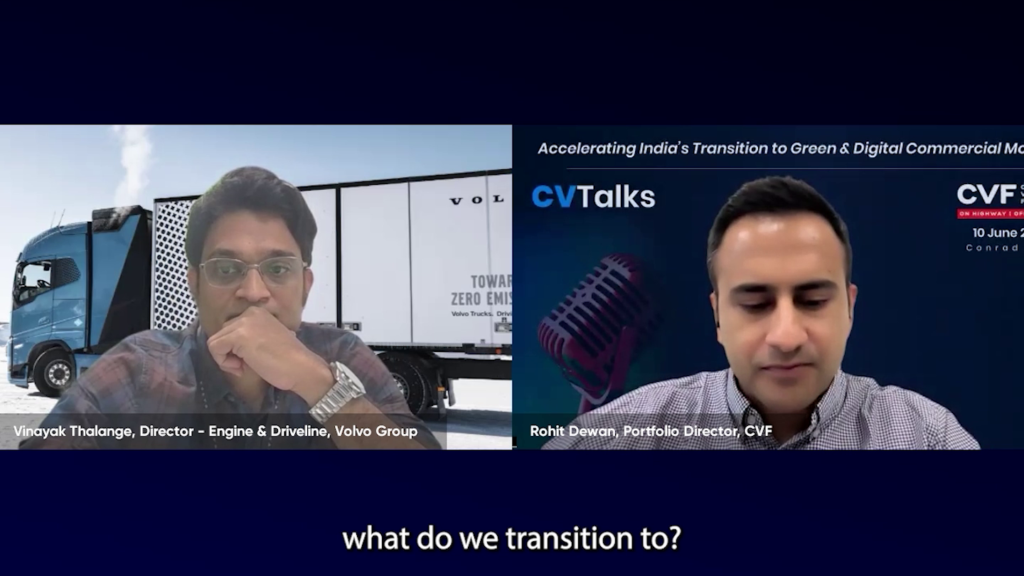
A major focus of the conversation revolved around the concept of “multi-fuel mobility,” which Vinayak described as the industry’s strategic response to uncertainty. Rather than betting entirely on a single technology, OEMs like Volvo are investing across multiple platforms. This diversified approach allows manufacturers to adapt to varying regional realities, infrastructure developments, and customer requirements. India’s commercial vehicle ecosystem, in particular, presents unique challenges that make a one-size-fits-all solution impractical. Urban distribution fleets may benefit from battery electric vehicles, while long-haul freight operators may find LNG or hydrogen-based technologies more suitable.
Hydrogen also emerged as a key point of discussion. Vinayak explained that both hydrogen internal combustion engines and fuel cell technologies hold promise for heavy commercial applications due to their potential for longer range and faster refueling times. However, infrastructure readiness remains one of the biggest hurdles. The conversation highlighted that while hydrogen generates significant excitement globally, realistic timelines for widespread commercial deployment in India will depend heavily on policy support, fuel production capabilities, and infrastructure investment.
Another important topic was the tension between sustainability and profitability, particularly for small and mid-sized fleet operators. While many operators recognize the importance of reducing emissions, immediate financial pressures often outweigh long-term sustainability considerations. Vinayak acknowledged that greener technologies currently involve higher upfront investments in many cases, creating hesitation among transporters. However, he also pointed out that economics are gradually improving as technology scales up, battery prices decline, and government support mechanisms evolve. The discussion suggested that India may eventually reach a tipping point where green mobility becomes economically advantageous rather than merely regulatory-driven.
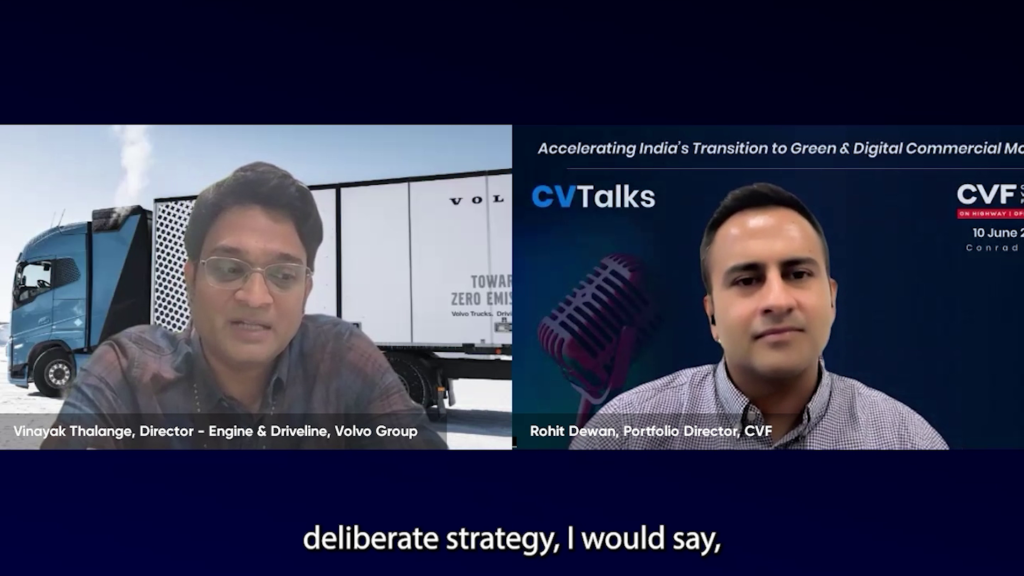
Toward the conclusion of the interview, the focus shifted specifically to India’s future commercial vehicle landscape over the next five to ten years. Vinayak predicted a gradual but undeniable diversification of powertrains across the market. Diesel is expected to remain relevant for certain heavy-duty applications in the near term, but cleaner alternatives will increasingly gain market share in targeted segments. Urban fleets, last-mile logistics, and short-haul operations are likely to see faster electrification, while long-haul trucking may transition through a combination of LNG, hydrogen, and advanced hybrid solutions.
The conversation ultimately reinforced a powerful message: the future of commercial mobility will not be defined by a single winner. Instead, success will depend on identifying the right technology for the right application while balancing sustainability, infrastructure readiness, and economic viability. Vinayak’s insights reflected both global technological trends and the unique operational realities of the Indian market, offering fleet operators, policymakers, and OEMs a pragmatic view of the road ahead.
Episode 3 of CV Talks successfully captured the complexity, urgency, and opportunity surrounding the commercial vehicle industry’s transition toward cleaner mobility solutions. As the sector prepares for a multi-fuel future, discussions like these are becoming increasingly important in helping stakeholders navigate one of the most significant transformations the industry has ever witnessed.


Leave a Reply